Showing posts with label 2ND YEAR. Show all posts

Saturday, 11 April 2020

Unit 5: Writings

WB; Page 47; Ex 3


   Hello writers! Today I am going to summarize the most important tips that Charlie P. has told us on her blog article and why she thinks blogging is usefull. At first, she said that blogging helps her to reflect her feelings and success on the past and present and to plan her new movements. Also, she said that blogging is better than writing a diary because when you know people are going to see it, you write as well as you can. She said that it isn't important about what subject you write if it helps you process your ideas and discover new ones. She talked about comments on her blog posts and how this boosts her confidence and make her continue writing without any important disadvantages.
   In my opinion, blogging is a good way to express the feelings, but, under my point of view, the bad comments would make you dessist and stop writing. So my advice would be to start writing a blog but with the comments out before you start to be sure about your writing and your blog.

Unit 5: Writings

WB; Page 45; Ex 4

Announcing the first school's rock band concert

Great news for rock music lovers! We are pleased to announce that we are listening our first school's rock band concert.

Hurry! Limited places!

Join us at 9 p.m. next Friday in the school hall and take a ticket for the concert. The idea is to present the first hundred of fans to the pavilion to listen the concert!

The concert night

After taking the tickets, all fans with them are invited to the concert. The band members start the meeting with their story and, after that, they start with their songs. After the concert, a famous secret rock singer will give tips to our students to improve. He/she will talk a bit about his/her story and maybe he/she would sing one of his/her famous songs. Fans will can eat and drink their own food or drink.

Stay in touch online

Register with the band' website and access information about next songs and concerts. You can also follow them on other social networks such as Instagram or Twitter and listen to their songs on music platforms like You Tube or Spotify. You can comment and interact with the musicians in all of them.


Friday, 8 June 2018

UNIT 7: THE GREAT OUTDOORS

GLOSSARY
HABITAT: The natural environment of a living thing.
PAIN: Physical suffering; great discomfort.
PREDATOR: Any organism that exists by preying on another.
PREY: An animal hunted for food, esp. by a meat-eating animal.
WILDLIFE: Animals living in the wild.

LISTENING
  • Video: Animals in the wild __👍
  • Extreme Journeys__👍
  • Video: The Making of the Grand Canyon__👍
  • Lake adventures__👍
  • Archery__👍
  • Exam__
READING
  • Keep safe in the wild__👍
  • Kiwi - The New Zeland's national symbol__👍
  • The Legend of Why the Kiwi can't fly__👍
  • Model text__👍
  • Village has turned into an island__👍
  • Exam__
SPEAKING
  • Shakespeare in love__👍
  • Romeo and Juliet__👍
WRITING
  • Advice__👍
  • Exam__
TRANSLATION
  • Practise__👍
  • Exam__
PROJECTS
  • Romeo and Juliet__👍
THINGS THAT I NEED TO WORK
  • Traduction
THINGS THAT I WORK
  • Live in wild
  • Modals
  • Advice and instructions

Tuesday, 15 May 2018

CELTIC MUSIC

A- ALL SOULS NIGHT_LOREENA MCKENNIT   TRANSLATE

Hogueras salpicando las pendientes onduladas
Las figuras bailan alrededor y alrededor
De tambores que tocan los ecos de la oscuridad
Moviendose en el sonido pagano

En algún lugar en una memoria escondida
Las imágenes pasarán delante de mis ojos
De fragantes noches de paja y de hoguera
Y bailando para la siguiente sorpresa

Puedo ver la luz en la distancia
Temblando en el oscuro reloj de la noche
Velas y faroles están bailando, bailando
Un vals en todas las almas nocturnas

Figuras de tallos de maíz curvadas en la sombra
Sostenidas en lo alto cuando las llamas saltan alto
El cuchillo verde sujeta el cepillo de acebo
Para señalar dónde el año viejo pasa

Puedo ver la luz en la distancia
Temblando en el oscuro reloj de la noche
Velas y faroles están bailando, bailando
Un vals en todas las almas nocturnas

Hogueras salpicando las pendientes onduladas
Las figuras bailan alrededor y alrededor
De tambores que tocan los ecos de la oscuridad
Moviéndose en el sonido pagano

De pie en el puente que cruza
El río que va fuera del mar
El viento se cae de mil voces
Ellos pasan al puente y a mi

Puedo ver la luz en la distancia
Temblando en el oscuro reloj de la noche
Velas y faroles están bailando, bailando
Un vals en todas las almas nocturnas  x2

B- WHO IS LOREENA MCKENNIT?
She is a musician who plays the piano, the harp, the acordion and she sings with a Soprano voice. She usually plays in Celtic Music,World Music or New Age Music. She plays in films like Tinkerbell or The Tempest.

C- MORE MUSIC INFLUENCES
The song 'All Souls Night' have Folk and Pop influences.

D/E- PAMELA WYN SHANNON
She is a musician who plays Folk music, she has borned in Massachusetts, UK. She has got many popular songs like 'September's Way' or 'Vespertine Autum'.

F- FEELINGS
Ithink this music is very calm and relaxed and if you have got a bad mood in your day, you can put this song and forget all the bad experiences of the day.

G- THE UNQUIET GRAVE
The main topic of the song is a girl that is in love with a death boy and she is crying in his grave, but the boy doesn't want that, he wanted to sleep and he becames a ghost and saied her to go away. I like the story, because the girl wanted to help his true love, and the boy wanted to avoid the pain of the girl.

H- GWENDAL
They are from French.

I-  FEELINGS
Tis music transmit some happy feelings to me. 


Wednesday, 9 May 2018

TWEET

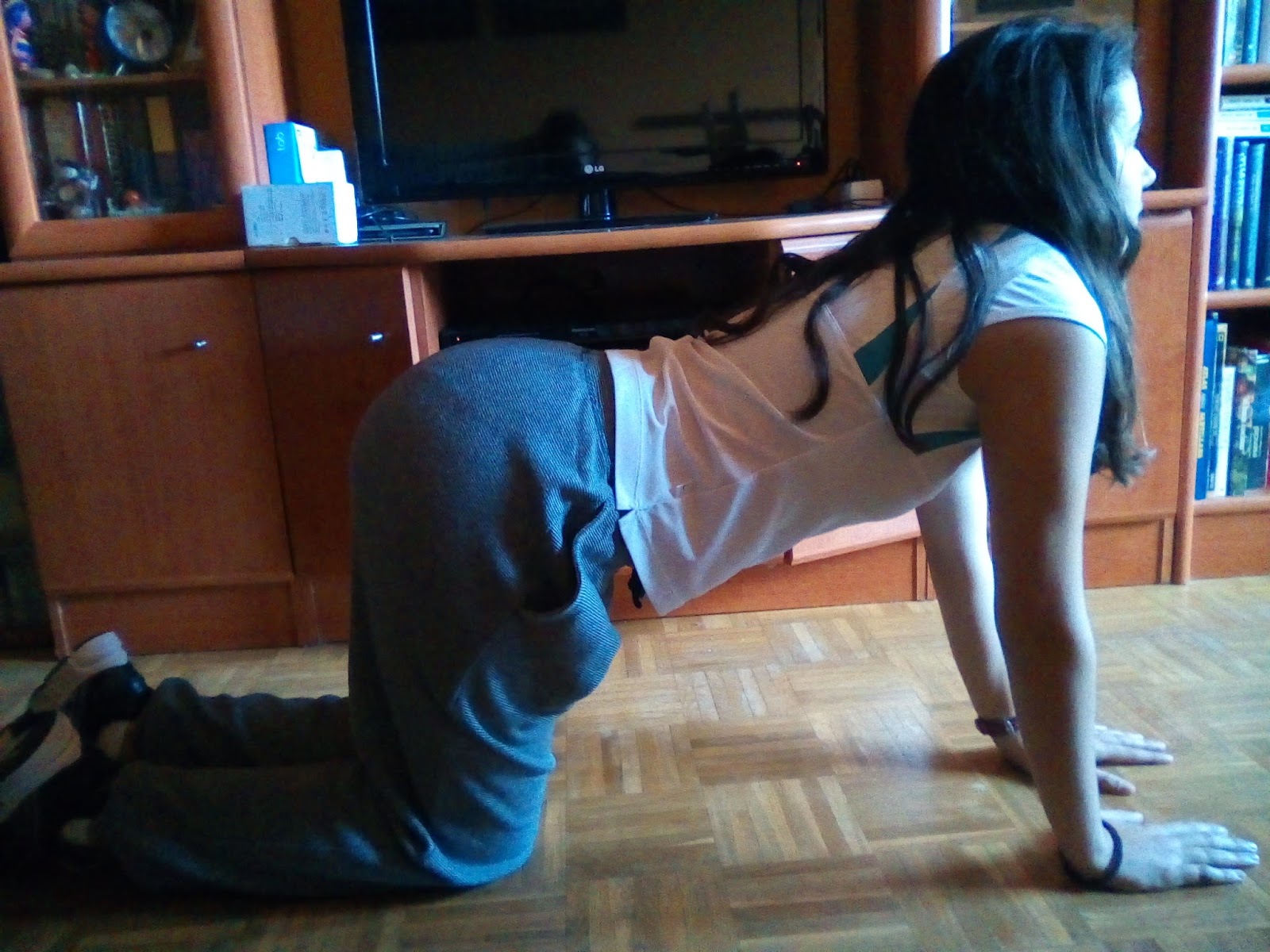
This exercise works the back and the lower part of the backbone.
In this posture you have to fell the muscles of your core.

In this posture you have to take air.

Thursday, 12 April 2018

FOOTBALL

  • GOAL → Gol
  • PENALTY AREA → Área de meta
  • GOAL POST → Palo/Poste
  • SOCKER → Futbolista
  • GOALKEPPER → Portero
  • REFEREE  Árbitro
  • DEFENDER → Defensa
  • COACH → Entrenador
  • FORWARD → Delanter
  • UNSPORTING BEHAVIOR → Conducta antideportiva
  • FOUL → Falta
  • CROSS → Pase cruzado
  • THROW-IN → Saque de banda
  • CORNER KICK → Saque de esquina
  • GOAL KICK → Saque de portería
  • KICK-OF → Saque de fuera

Wednesday, 11 April 2018

SHAKESPEARE IN LOVE

MAIN  CHARACTERS

  • WILLIAM SHAKESPEARE: He was a theatre writter. He wanted to fell in love because he wanted to write a play of love. He fell in love with Lady Viola, a noble dame.
  • LADY VIOLA: She is a noble dame who wanted to be an actress. She started to dress like a man and to play in the new work of Shakespeare. She fell in love with Shakespeare, but she had to get married with another man.
RELATION BETWEEN THE FILM AND THE PLAY 'ROMEO & JULIET'

In the film, Shakespeare was working in the play. He changed the title of it three times. At the begining of the film, Shakespeare wanted to write a romantic comedy, but then, when he knew the end of his love with Lady Viola, he changed the end and he wrote a tragedy.

THE THEATRE OF THE AGE

The theatre was made of wood, it had some terraces in which you could saw the stage. In the theatre, only mens could act. 

THE SOCIETY OF THE AGE

We can see in the film the inequality of the age. We can see the man who have 'The Rose' theatre who have many debts and he pay it with the theatre beneficts or the boy who lived with his own works. But we can see the richness of the Queen and the noble people like Lady Viola family.

THE HISTORY

In the film we can see the Queen Elizabeth I (the first) and his society, so we see the XVI Century.

RELATION BETWEEN THE QUEEN AND THE THEATRE

In the film we saw the Queen in the theatre and she sayed that she loves the theatre and the Shakespeares works.

Monday, 9 April 2018

UNIT 6: WORK AND PLAY

GLOSSARY
APPLY: To devote (oneself) of to.
CAREER: Having as a career; proffesional.
CHARITY: A charitable fund, organization, foundation, or institution.
OFFICE: A place where business, work, or one's job is conducted or accomplished.
WORK EXPERIENCE: Experience of working in the jobs.
CABIN CREW: People who works in planes or boats to make the trip safe.
CHECK IN: To register or report one's arrival.
DELAYED: Of or pertaining to a particle, as a neutron or alpha particle, that is emitted from an excited nucleus formed in a nuclear reaction, the emission occurring some time after the reaction is completed.
LONG HAUL: A relatively great period of time.
ON MY WAY: In the same form than me.
CURE: medicine or treatment to heal or restore health; remedy.
HUNTER: A person who hunts game or other wild animals for food or in sport.
POISON: A substance that taken into the body can destroy life or cause illness.
TRACK: A pair of parallel lines of rails on which a railroad train, trolley, or the like runs.
TRIBE: A group of people descended from the same ancestor, having similar customs and traditions.

LISTENING

  • Video: A New York florist__👍
  • Radio Chatline - About Holiday__👍
  • Video: A New York bike messenger__👍
  • Festival__👍
  • Video: Tweed__👍
  • Exam__
READING
  • Searching for the ideal job__👍
  • The Snake Catchers__👍
  • Meet Dave Cornthwaite!__👍
  • Festival__👍
  • E-postcard__👍
  • Exam__
SPEAKING
  • Michael__👍
  • Funtional Language (About a Job)__👍
  • About Shakespeare__
WRITING
  • Job__👍
  • E-postcard__👍
  • Exam__
TRANSLATION
  • Practice__
  • Exam__
PROJECTS
  • Shakespeare film__👍
AREAS I NEED TO WORK
  • Translation
THINGS THAT I WORK
  • Present Perfect
  • Never/Ever
  • There have/has
  • Jobs
CULTURE
  • Tweed
  • Dave Cornthwaite
  • Snake Catchers

GRAMMAR OF UNIT 8
  • Indefinite pronouns
  • Quantifiers


Friday, 6 April 2018

SELF-ASSESMENT (SECOND TERM)


  1. After this term I can play better the recorder than before. Now I learn more music vocabulary and more music contents.
  2. I like the practising day the most, but all music classes are very interesting.
  3. I think I do better the rythm and the recorder practise than the theoric part.
  4. I think I am confused in music dictations, but I think I am improving.
  5. I think I don't need help in nothing.
  6. I'm learning to play the spanish guitar.
  7. I need to improve in music dictations.
  8. I learn culture of Shakespeare time and I learn some beginings of some instruments.

Saturday, 24 February 2018

SHAKESPEARE

SHAKESPEARE IS COMING

  • William Shakespeare was a famous writter of the XVI Century, he was a person of the lower class and when he start writting, he start to live with only the money that he win for his novels.
  • The most famous music in the XVI Century is the pavan and its dance, this music usually plays in parties of the upper class, the dance is very stately.
JOHN DOWLAND
  • This music makes me a relax feeling, it was very coordinated and this make it very beautiful music.
MATTHEW LOCKE
  • This music is very animated (for the century) and this produced in me happy feelings.

Monday, 19 February 2018

UNIT 5: YOUNG AND OLD

GLOSSARY
EASILY: In an easy manner.
EVENTUALLY: Finally.
FLUENTLY: Spoken or written with ease.
FORTUNATELY: Receiving good from uncertain or unexpected sources; lucky.
PROPERLY: Most suitable; right.

LISTENING

  • Eliza Rebeiro__👍
  • Survey__👍
  • Vlnspired__👍
  • Practical English__👍
  • Exam__👍
READING
  • She could play the piano when she was two__👍
  • Britain's got talent__👍
  • Model text__👍
  • Exam__👎
SPEAKING
  • About Charles Dickens__👍
  • Michael__👍
WRITING
  • Practice__👍
  • Exam__👍
TRANSLATION
  • Exam__👎
PROJECTS
  • Blog__👍
  • Oliver Twist__👍
AREAS I NEED TO WORK
  • Traduction
THINGS THAT I WORK
  • Comparative adjectives
  • Superlative adjectives
CULTURE
  • Famous people
  • Britains Got Talent

Thursday, 11 January 2018

UNIT 3: PEOPLE AND PLANET & UNIT 4: MAKING IT HAPPEN

GLOSSARY
FIT: In good physical condition;in good health.
HEALTHY: Having or enjoying good health.
ILL: Sick; unwell; of poor health.
STRONG: Having, showing, or involving great power in the body or muscles; physically vigorous.
UNFIT: Not qualified; incompetent.
WEAK: Lacking in strength or vigor; feeble.
ANNOYED: Be disturb or bother in a way that displeases, troubles, or inrritates.
BROKE: Without money.
MESSY: Dirty, untidy or disorderly.
PLEASED: Having a feeling of pleasure, happiness, or satisfaction.
RICH: Having a great amount of something.
TIDY: Clearly organized.

LISTENING
  • Robot car__👍
  • We'll all live longer__👍
  • If we all eat insects, ... __👍
  • Kit's travels__👍
  • A teenage inventor__👍
  • Exam__👎
READING
  • Future humans__👍
  • Predictions for 2050__👍
  • Insects and algae__👍
  • Tomorrow's scientists__👍
  • Help us save our planet__👍
  • The farm's of the future__👍
  • Exam__👍
SPEAKING
  • With Michael__👍
  • Practical English__👍
WRITTING
  • About enviroment problem__👍
  • Exam__👍
TRANSLATION
  • Exam__👎
PROJECTS
  • Charles Dickens__👍
  • Wish you were here__👍
AREAS I NEED TO WORK
  • Traduction
THINGS THAT I WORK
  • 1st Conditional
  • Will / Will not (Won't)
  • 2nd Conditional
  • Be going to
CULTURE
  • Global Warming

WISH YOU WERE HERE

2) Watch to the song in Youtube. Analyza the remarkable aspects of the song (style, history, use of English, and so on).
Wish you were here is an England song, the most famous musicians who played this song is Pink Floyd, it is a progresive rock song. This song borns with the melancholy of a musicians' lost friend.


3) Do some research (but not in depth) on the song, about some of the song, about Pink Floyd, etc.
Pink Floyd is a group of musicians who started playing progresive rock in London the 1965, they are a group of frirnds too. They have many famous songs like "Wish you were here".

6) Write down a new first stanza in order to fit in with the musical structure. Each teacher (English and Music) will evaluate their corresponding items.
1)
So, so you think he can save
My heart from a fiend
Your child from a death
Can he help his girlfriend
From a cold or a fall?
A yonquie from drugs?
Do you think he can save?


Wednesday, 10 January 2018

CHARLES DICKENS

He was born in Portsmouth, in the UK, the 7th February 1812. He was an importan Britain writter. In 1822, he went to London with his family and two years later, his father was imprisoned and he started to work on a shoes factory. He started journalist but , little by little, he started to live from his texts. He death in Highman, in the UK, because of a cardeovascular accident, the 9th June 1870


His parents were: John Dickens (a member of the House of Commons) and Elizabeth Dickens. So Charles was a member of middle class.

In this time, England had much of poor people and the rich don't were interested about it, they wanted more money, Dickens talk about this inequality in his novels and tails.

These are some books and novels by Charles Dickens:

  • Oliver Twist 
  • David Copperfield 
  • Martin Chuzzlewit 
  • Barnaby Rudge
  • Sketches by Boz
  • American notes

Monday, 8 January 2018

SELF-ASSESSMENT (FIRST TERM)


  1. Now I know better the different music tipes. Now I can read the staffs better, so I can know better music vocabulary. And now I sing better than before start 2nd ESO.
  2. I like more practical clases than theoric ones.
  3. I think I do better practise than theory but I have many things to learn in this year.
  4. I usually make mistakes in music dictations but I think at the end of the course I will have it learn.
  5. I need help in the duration of crochets on differents tipes of music.
  6. I only do English at school and I'm learning to play the guitar with my mum help.
  7. I have to improve all of music contents because is a difficult art for me.
  8. I learn about the music history and I match it with human history. I learn some famous songs like 'Moorning Mood','Scarborough fair' or 'Wish you were here'.
  9. In 6th of primary I don't had any interest of music clases and music history, but this course I begin with Marcos and I think the way of work in class made more interesting the class for me. I think Marcos knows well music concepts because he splain and he answer well our answers.

'A CHRISTMAS CAROL' BY CHARLES DICKENS: GLOSSARY

SCENE 1

  • Christmas Eve: The evening or the whole day before Christmas Day.
  • Clerk: A person employed to keep records or perform general tasks in an office, etc.
  • Nephew: A son of one's brother or sister.
  • Waste: To use up or spend to no profit; squander.
  • Kind: Of a good or benevolent nature or disposition, as a person.
  • Partner: One who is associated with another; an associate.
  • Dead: No longer living.
SCENE 2
  • Suddenly: Happening, coming, made, or done quickly or unexpectedly.
  • Knocker: A hinged knob, bar, etc., on a door, to use for knocking.
  • Meal: Food served and eaten at one time.
  • Bell: A hollow metal instrument shaped like a cup that produces a ringing sound when struck.
  • Swing: To move (the hand or something held) with a movement back and forth, forward and backward, or round and round.
  • Loudly: Marked by high volume of sound.
  • Frightened: Scared.
  • Chains: series of metal rings passing through one another, used for hauling, for supporting, or as decoration.
  • Believe: To have faith in the truth of.
  • Late: Occurring after the usual or proper time.
  • Tremble: To shake with short, quick movements, as from fear or cold; quake.
  • Striking: Noticeable; conspicuous.
SCENE 3
  • Robe: A long, loose or flowing gown or outer garment worn by men or women as ceremonial dress, an official vestment, or garb of office.
  • Bright: Giving off or reflecting light.
  • Above: In, at, or to a higher place, position, or rank.
  • Alone: Separate, apart; by oneself.
  • Bring: To carry or cause (someone or something) to come toward the speaker; convey.
  • Kind: Having a good nature or way of behaving; compassionate.
SCENE 4
  • Warehouse: A building for the storage of goods or merchandise.
  • Apprentice: A person who works for another in order to learn a trade.
  • Wife: A woman joined in marriage to a man.
  • Guest: A person who spends some time at another's home in a social activity, as a visit or party.
  • Tormenting: To cause (someone) to feel severe suffering.
SCENE 5
  • Husband: A married man.
  • Alone: Separate, apart. 
  • Dying: About to die.
  • Nightcap: A cap of the head, intended to be warm in the bed. 
SCENE 6
  • Lies: To be in a horizontal or flat position, as on a bed or the ground; recline (often fol. by down).
  • Turkey: The flesh of this bird used as food.
SCENE 7
  • Bless: To ask for God's divine favor upon or for.
  • Crutch: A staff or support to assist a person in walking, usually having a crosspiece at one end to fit under the armpit.
  • Let's drink to: To show one's good wishes by swallowing some wine or other drink.
SCENE 8
  • Patience: The ability to control one's feelings in spite of misfortune or pain, without complaining.
  • Debt: An obligation to pay or perform something.


Thursday, 7 December 2017

1ST TERM
Listen: Escuchar
Play: Tocar
Sound: Sonido
Vibration: Vibración
Wave: Onda
Vacum: Vacío
Speed: Velocidad
Noise: Ruido
Umpleasant: Molesto
Hearing: Audición
Silence: Silencio
Composer: Compositor
Perform: Actuar
Performance: Actuación
Record: Grabar
Pitch: Tono, Altura
High: Alto
Low: Bajo
Melody: Melodía
Duration: Duración
Long: Largo
Short: Corto
Timbre: Timbre
Choir: Coro
Recorder: Flauta
Volume: Volumen
Staff: Pentagrama
Tone: Tono
Semitone: Semitono
Sharp: Sostenido
Flat: Bemol
Descending: Descendiente
Ascending: Ascendiente
Major scale: Escala mayor
Minor scale: Escala menor
→Semibreve: Redonda


→Minim: Blanca


Crochet: Negra


→Quaver: Corchea


→Semiquaver: Semicorchea


Rest: Silencio
Piano: Piano
Violin: Violín
Guitar: Guitarra
Share drum: Caja de percusión
Chordophone: Cordófono (instrumento de cuerda)
Aerophone: Aerófono (instrumento de viento)
Membraphone: Membráfono (percusión de membrana)
Viola: Viola
Violoncello: Violonchelo
Clarinet: Clarinete
Saxophone: Saxofón
Oboe: Oboe
Bassoon: Fagot
Trumpet: Trompeta
Trombone: Trombón
Harp: Arpa
Flute: Flauta travesera
Kettledrum: Timbal
Lyrics: Letra (de las canciones)
Bass: Bajo

2ND TERM
Intensity: Intensidad
Loud: Alto
Moderate: Medio
Soft: Suave
High-pitched: Tono alto
Low-pitched: Tono bajo
Treble clef: Clave de sol
Keyboard: Teclado
String: Cuerda
Fret: Traste
Interval: Intervalo
Melody: Melodía
Musical meaning: Significado musical
Rhythm: Ritmo
Dot: Puntillo
Ligature: Ligadura
Clap: Dar palmadas
Stress: Acento
Orchestra: Orquesta
Conductor: Director de orquesta
Tense: Tenso
Loose: Suelto (cuerda)
Bow: Arco
Tuning peg: Clavija
Embouchure: Boquilla
Brass: Viento metal
Shake: Agitar
Chamber music: Música de cámara
Amplifier: Amplificador
Loudspeaker: Altavoz
Measure: Compás

Monday, 13 November 2017

UNIT 2: LOST AND FOUND

GLOSSARY
COINS: A piece of metal stamped and issued by a government as money.
FIELD: A piece of open or cleared land, esp. one suitable for pasture or growing things.
SMELL: The sense of being able to detect something with the nose.
STOMACH: saclike part of the body where food is stored and partially digested.
TOOL: An implement, esp. one held in the hand, as a hammer, for performing a mechanical operation.

LISTENING

  • The ancient wonders of China__👍
  • Building the Titanic__👍
  • Practical English__👍
  • The world needs more letters__👍
  • Exam__👍

READING

  • What a find!__👍
  • The world needs more love letters__👍
  • The Titanic sinks__👍
  • Thank you note__👍
  • The gift of reading__👎
  • Exam__👍

SPEAKING
  • With Michael__👍
  • Practical English__👍
WRTTING

  • Exam (thank you note)__👍

TRANSLATION

  • Notebook__👎
  • Exam__👎

PROJECTS
  • Song of "Scarborough Fair" (with music)__👍
  • Portfolio__👍
AREAS I NEED TO WORK
  • Traduction
THINGS THAT I WORK
  • Past simple
  • Past Continuous
CULTURE
  • Titanic